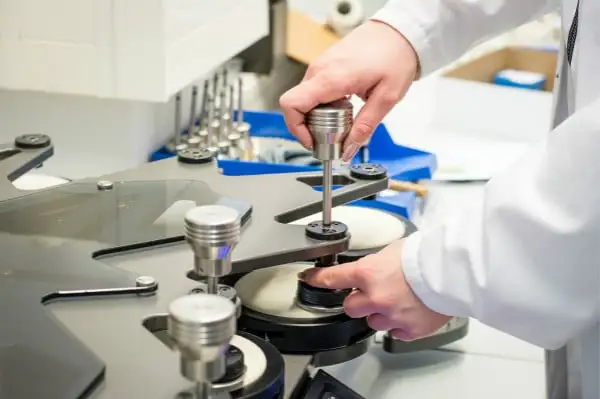
Textile fabric testing content:
1. Physical properties: density, yarn count, gram weight, twist, yarn strength, fabric structure, fabric thickness, coil length, Fabric Enveloping coefficient, fabric wrinkle or Weaving shrinkage rate , curvature and oblique deformation, tensile strength, tear strength, seam slippage, seam strength, adhesive strength, single yarn strength, unit line density strength of yarn, anti-hook wire, crease recovery angle test, stiffness Test , water repellency test, leak resistance, Elasticity and recovery force, air permeability, water permeability and vapor function, incineration, bursting strength, abrasion resistance test, pilling resistance, etc
2. Colorfastness: color fastness to soap washing (sample), color fastness to friction, color fastness to chlorine water, color fastness to non-chlorine bleaching, color fastness to dry cleaning, color fastness to actual washing ( Ready-to-wear , fabric), sweat color fastness, water color fastness, light color fastness, seawater color fastness, saliva color fastness
3. Dimensional stability: washing machine washing dimensional stability, hand washing dimensional stability, dry cleaning dimensional stability, steam dimensional stability
4. Apperance After Wesh: Washing machine washing appearance stability, hand washing appearance stability, dry cleaning appearance stability
5. Chemical Analysis:P H content, formaldehyde content, lead content, azo dye test, heavy metal content test, water absorption, moisture content, odor, mercerizing consequences of cotton, hot pressing, dry heat, sublimation, acid spots, alkali spots, water spots, phenolic yellowing, etc
6. Fiber Content Analysis: cotton, linen, wool (sheep, rabbit), silk, polyester, viscose, spandex, nylon, down content, etc.
Test classification
According to the different properties of the testing items: Textile testing can be divided into four categories according to the different properties of the testing items, namely: appearance testing, physical property testing, chemical performance testing and functional testing.
1. Appearance inspection
Appearance inspection is to detect some appearances of textiles Indicators These apparent indicators include the uniformity of the strip and the thickness of the yarn; the flatness and finish of the gray cloth, weft and bevel; The processing and manufacturing level of finished textile products, tags Whether it is used correctly and specifically Accuracy ; Whether the finished textile product is in color difference, weaving defects, stains and abnormal odors, etc.
2. Physical property testing
Physical property testing is to detect the physical properties of textile products such as texture, fastness index and size change, mainly including: the strength of the yarn, the degree of twisting, drafting and winding; water resistance, washing and water immersion resistance, acid and alkali sweat resistance, dry and wet friction resistance, light resistance, light resistance and sweat resistance mixing and other color fastness; The composition content, density and grammage, shrinkage, drape, top and tear strength of the gray cloth; Textile products Auxiliary materials and the ingredient content and weight of the filling; the size of the finished textile changes after water or dry cleaning; sewing fastness of special parts; whether the finished textile product will be pilled; The weight of down products, Quality , fluffiness, etc.
3. Chemical testing
Chemical testing is the detection of changes in the chemical properties of textile products Indicators , mainly including: pH value formaldehyde in textiles and clothing fabrics, free heavy metals, organic volatiles of prohibited azo dyes, odors; oxygen consumption of down products, and whether there are harmful microorganisms and bacteria in them.
4. Functional testing
Functional testing is testing Textiles The special functions mainly include: anti-static, anti-electromagnetic radiation, anti-ultraviolet rays, flame retardant and other properties of textiles; the warmth and breathability of the clothing fabric, as well as the anti-fouling, water-repellent, mildew and other characteristics of the clothing fabric; the sterilization effect of some health care underwear, etc.
According to the testing method, textile testing can be divided into three categories, namely: sensory testing, instrument testing, sensory and instrument cooperation testing.
1. Sensory testing
Sensory testing is the inspection of textiles by inspectors according to their own functions such as sight, smell and touch. Most of the appearance inspections belong to such tests, for this reason, the inspectors are required to have a certain level of testing related Work experience and expertise knowledge 。
2. Instrument testing
Instrument testing is a test that must rely on relevant testing instruments and equipment. For example, the strength test of various textiles, washability, lightfastness and color fastness test, friction test, prohibition azo dye test, textile special function test, etc., for this type of testing, the integrity rate and accuracy of the instrument are required to be very high.
3. Sensory and instrumental coordination testing
The cooperation between the senses and the instrument is to rely on the inspector, also Yes For example, through the use of measuring instruments such as balances, scales, measuring cups, etc., inspectors can clearly understand the weight, quality and specifications of textile products; Through the use of microscope projectors, inspectors can determine the fiber composition of some multi-component worsted fabrics; Through the use of density mirrors, the inspector judges the warp and weft density of the fabric; Through specific instruments and equipment, inspectors can accurately determine the fluffiness of the down data etc. The requirements for this type of testing are higher, which not only requires the inspector to be quite familiar with the configuration of the operating aids of the instrument, but also needs to have strong analytical and judgment skills.